
Controlling stock across several warehouses and branches
A practical guide to syncing warehouses and retail stores with real-time transfers, reorder rules, and cycle counts.
When a wholesale and retail business expands from a single facility into multiple warehouses and branches, inventory control quickly grows complex. Company managers frequently run into a frustrating mismatch: excess inventory gathers dust in one branch while another location loses lucrative sales because the exact same product is out of stock.
This divide between where products sit and where customers demand them does more than just lose immediate revenue; it ties up valuable working capital in unproductive stock. Many owners try to manage these movements using disjointed messaging threads or manual Excel spreadsheets, but those methods break down rapidly once sales volume and transfer frequency increase.
The symptoms of stock chaos
Inventory issues usually surface as subtle daily warning signs that undermine profitability and erode customer trust. Without live visibility across storage locations, mistakes multiply during receiving, storage, order picking, and internal dispatches. Warehouses become isolated silos where neither management nor branch staff know true inventory levels.
- Conflicting inventory figures: Sales staff promise merchandise based on outdated records, only to discover at billing that another branch already sold or reserved the items.
- Duplicate purchasing despite surplus: Procurement teams release new purchase orders to external suppliers even though sufficient quantities sit unnoticed in a secondary warehouse, driving up storage and insurance costs.
- Fulfillment delays and picking mistakes: Warehouse teams spend hours searching bins and aisles for misplaced products, leading to delayed dispatches or incorrect items delivered to customers.
- Untracked internal transfers: Goods leave the main distribution center for a retail branch without formal transfer documents, resulting in unverified shortages discovered only during stressful annual audits.
- Expired items and damaged goods: Older batches get pushed into corners and forgotten while newly arrived stock ships first, resulting in direct financial write-offs and spoiled merchandise.
Five habits of a controlled warehouse
Organized trading companies rely on five practical operational habits to maintain smooth product flows across locations without stockouts or excess holding costs.
1. Maintain a single live inventory record
Consolidated inventory visibility provides the foundation for sound purchasing and sales decisions across your company. Branch staff and sales representatives must see real-time shelf counts, reserved quantities for active orders, and central warehouse availability instantly. This live picture stops unfulfillable commitments, reduces customer friction at checkout, and routes orders from the closest storage facility.
2. Document every internal transfer
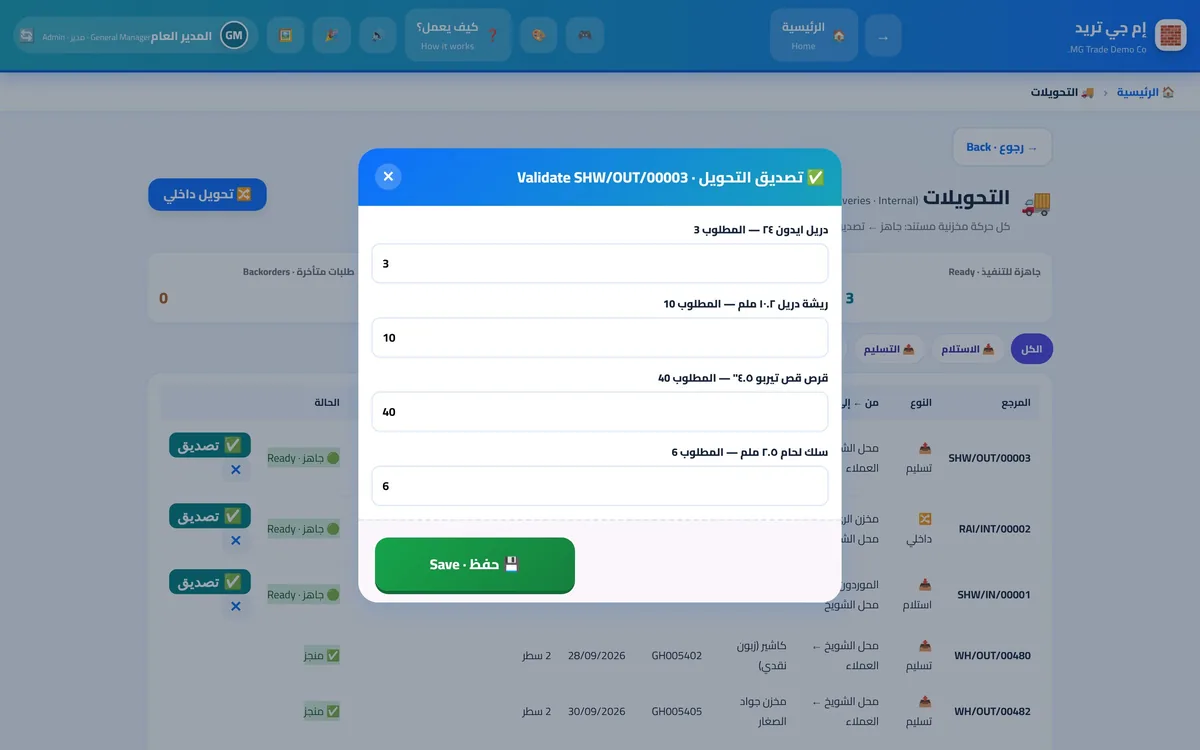
Stock transfers between facilities should never happen through phone calls or informal messages. Moving products from one site to another requires two documented checkpoints: a confirmed dispatch validation at the originating warehouse and a formal inspection and receipt at the destination. This dual verification stops goods from vanishing in transit and ensures full accountability for every team member.
3. Use structured picking lists and barcode scans
Standardized picking lists accelerate warehouse operations and eliminate fulfillment errors. Rather than wandering through aisles, warehouse pickers follow an optimized path to gather requested items according to their assigned bin locations. Barcode scanning at retrieval confirms item identity and quantity immediately, preventing accidental product substitutions before shipments leave the dock.
4. Configure automated reorder rules
Setting minimum and maximum thresholds for each product at every location transforms inventory management from reactive panic into proactive planning. When stock dips to the defined safety level, the system automatically creates a draft purchase order or suggests an internal transfer from central storage, factoring in vendor lead times to prevent unexpected shortages.
5. Transition to continuous cycle counting
Regular cycle counting eliminates the disruption of shutting down retail stores and warehouses for days during annual physical counts. By counting specific categories or fast-moving items on a weekly or monthly schedule, managers detect discrepancies early and resolve root causes immediately, whether related to data-entry errors or storage handling damage.
Tip: Start by configuring automated reorder rules for your top twenty best-selling items, then expand across the remaining catalog as your team builds confidence with the workflow.
How MG Trade helps
MG Trade brings sales, warehouses, purchasing, and accounting into one connected business platform that works end to end in Arabic and English.
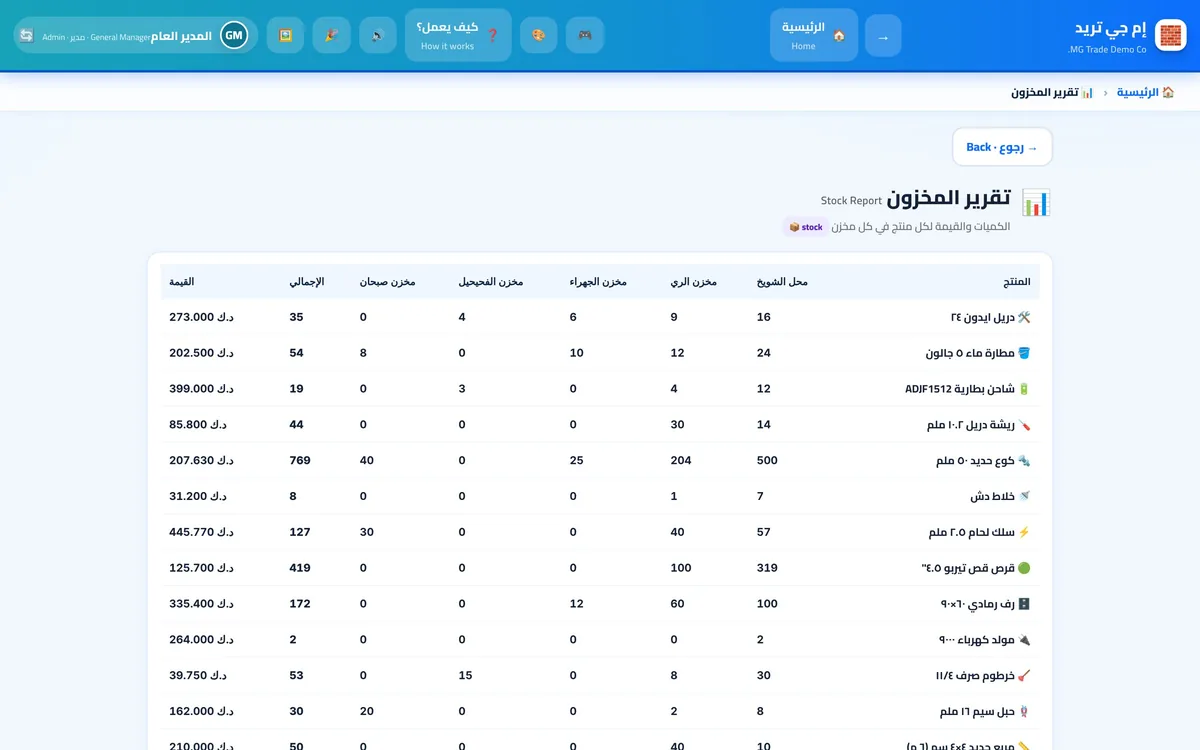
- Multi-warehouse inventory: Track quantities and inventory valuation across every warehouse and branch from a unified screen. Manage verified stock transfers, cycle counts, lot numbers, serials, expiry dates, and barcode scanning, with automated min/max reordering rules that select the cheapest supplier.
- Purchasing and landed cost: Connect supplier bills directly to purchase orders and warehouse receipts with two-step approval workflows. Allocate shipping, customs duties, and handling expenses across item costs to determine exact product margins.
- Retail POS: Serve walk-in customers quickly with an offline-capable retail point of sale that displays customer credit balances prior to checkout. Split payments across cash, KNET, and credit cards, and read our guide on POS split payments and daily closing to balance cash registers without end-of-day surprises.
- Clarity finance workspace: Access drill-down reports covering sales performance, collections, receivables, total stock valuation, and 13-week cash forecasts, complemented by an AI chat assistant that answers operational queries directly from your business data in Arabic or English.
Explore all system capabilities on our features page or visit our pricing page to select the right package for your trading operations.
Connecting your warehouses and retail branches provides complete clarity over every product while saving hours of manual paperwork. This unified control allows your team to fulfill customer orders reliably without tying up vital cash flow in stagnant stock. Book a free 45-minute online demo to see how practical multi-warehouse workflows run using your own products and storage structure.
See MG Trade in your business
A free 45-minute online demo, prepared around your own data. No commitment.