

POS daily close and split payments without surprises
A practical guide to managing cashier sessions, split payments, and matching shop sales to bank statements daily.

As closing time approaches at the end of a busy retail day, the cashier prints the register report, counts the physical cash in the drawer, and attempts to reconcile it against the electronic payment receipts. In many showrooms and stores, this routine leads to an unwelcome surprise: an unexplained cash shortfall or a surplus that does not match the printed sales summary. This daily discrepancy turns the end of the month into a frustrating accounting headache, wasting hours sorting through paper slips and credit card vouchers.
The trouble begins when a store accepts multiple payment methods and split transactions without a connected digital system that feeds sales directly into accounting journals. A shopper may settle part of their purchase in cash and pay the remainder using KNET or a Visa card, while fast-paced returns and exchanges take place during peak shopping hours. Without structured register controls, a gap quickly opens between what the cashier counts in the drawer and what the finance team sees on bank statements, making revenue reconciliation an uphill struggle.
Why the cash drawer never matches the sales report
Cash drawer discrepancies rarely stem from deliberate errors; they usually happen because manual procedures break down during busy store shifts. When lines form at the counter, cashiers naturally focus on serving customers quickly rather than verifying paperwork, allowing small recording gaps to accumulate throughout the day. Across most retail showrooms and outlets, these variances trace back to three common operational bottlenecks:
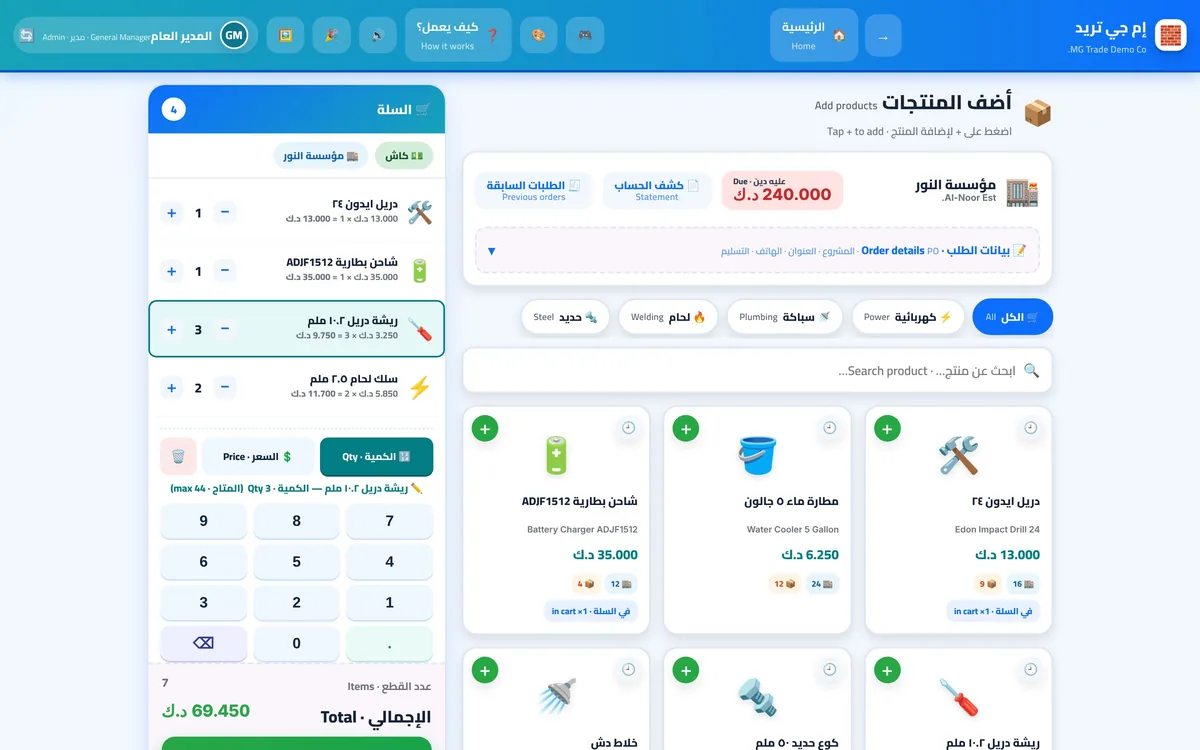
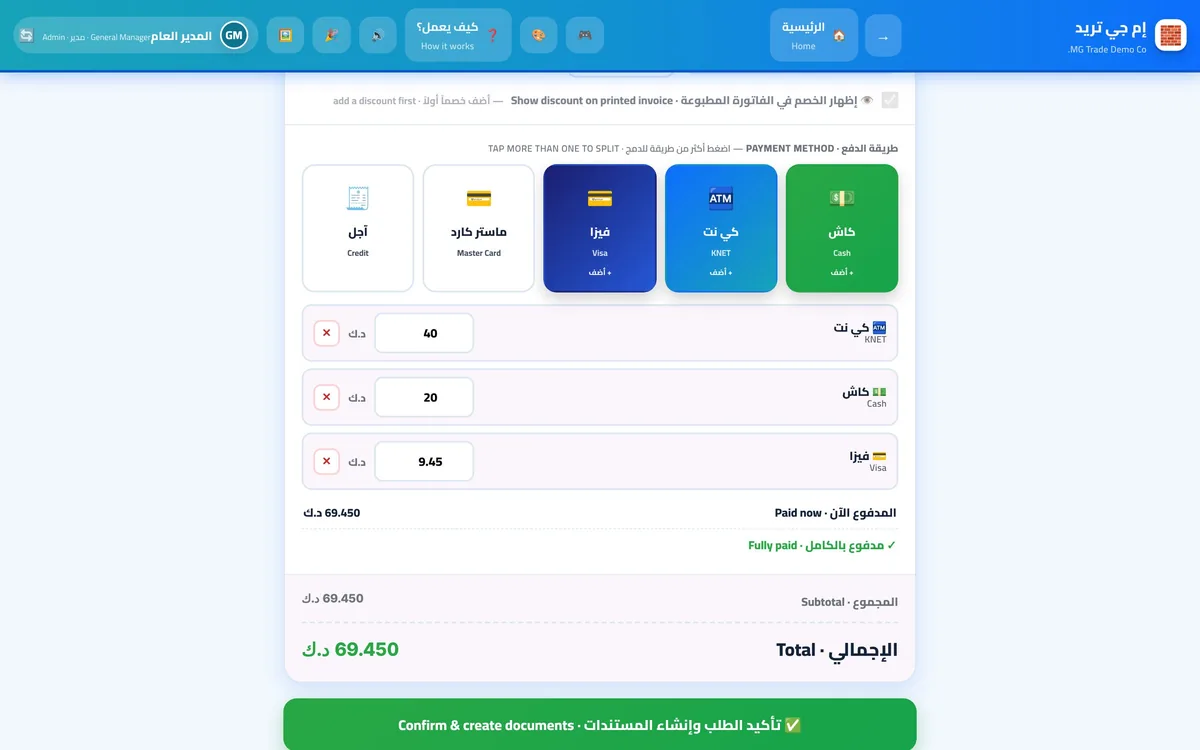
- Split payments on a single sales ticket: Shoppers frequently choose to pay part of their total in cash and the remainder using KNET or a credit card. When a point of sale terminal cannot record separate payment lines on the same receipt, the cashier often logs the entire sale under one method and leaves a handwritten note, creating immediate imbalances.
- Fast-paced returns and exchange transactions: Processing merchandise returns without linking them directly to the original receipt creates confusion in both inventory and cash tracking. If a customer returns an item originally purchased with a debit card but receives cash, or vice versa, the drawer balance separates from bank settlement records immediately.
- Overlapping shifts without formal register handovers: Handing over a till between cashiers without counting drawer contents and closing the active session blurs individual responsibility. When a discrepancy appears at the end of the evening, managers cannot pinpoint which shift or transaction caused the imbalance.
A disciplined daily close routine for retail stores
Ending the retail day without discrepancies requires a consistent procedure that begins at opening time rather than during evening closing. Standardizing these steps across every branch gives accounting teams dependable numbers and ensures transactions flow smoothly into the general ledger without duplicate manual entry.
- Setting the opening cash float: Every cashier begins the shift by counting and confirming the dedicated petty cash float before processing their first transaction. Recording this baseline in the system isolates initial drawer funds from daily sales collections, preventing confusion during the evening reconciliation count.
- Recording split payments at the moment of sale: Cashiers capture cash, KNET, and card amounts on separate payment lines within the checkout screen before issuing the customer receipt. Recording each payment method immediately eliminates the need for informal sticky notes and keeps tender balances accurate in real time.
- Reconciling payment terminal settlement slips: The cashier prints the end-of-day settlement batch from each card terminal and verifies the totals against the electronic payment lines in the point of sale. Total KNET and card transactions must balance against payment terminal summaries before the cashier concludes the shift.
- Counting physical cash and closing the cashier session: The cashier performs a blind physical cash count, entering actual currency counts into the register screen. The system calculates any variance between expected and actual cash, generating a clear session closing report for management review and sign-off.
Tip: Avoid postponing register closing until the following morning, as forgotten transaction details make tracking variances nearly impossible once shift staff leave.
Sales dashboards and bank statement reconciliation
The retail sales cycle does not end when the cash drawer shuts; it concludes when finance verifies electronic receipts against incoming bank deposits. Banking institutions batch and settle card transactions on their own schedules after deducting processing fees, requiring an orderly matching process that connects daily register batches to bank statements.
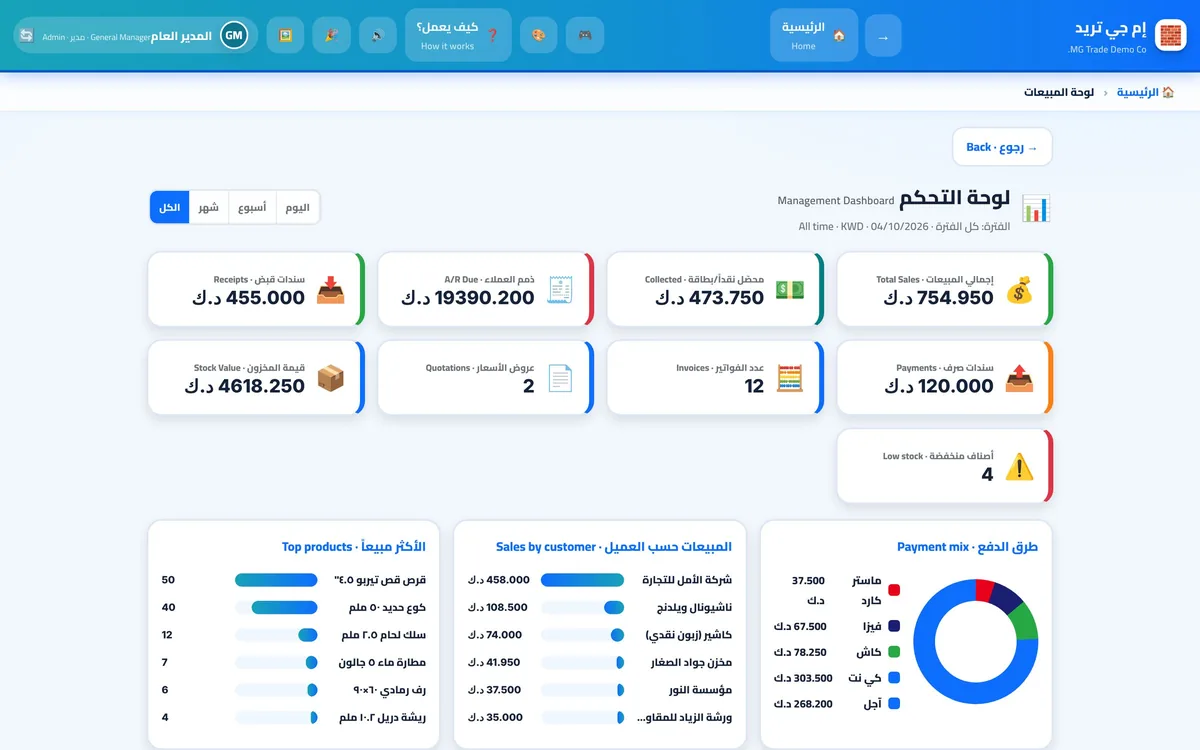
A centralized sales dashboard provides retail managers with clear oversight of individual branch performance, cashier sessions, and payment method breakdowns in Kuwaiti Dinars. Connecting register activity directly to warehouse management also updates stock levels instantly, preventing inventory shortages and discrepancies. You can read more about multi-location inventory coordination in our guide to controlling stock across several warehouses and shops.
How MG Trade helps
MG Trade unites counter checkout speed with comprehensive financial management on a single platform, eliminating the need to bridge disconnected retail software. The system provides integrated tools that support your store operations from the initial customer sale to the final journal entry:
- Retail POS: Fast counter sales with customer balance shown before you sell, operating reliably even during internet interruptions with offline-ready retail POS capabilities. It lets cashiers split one bill across KNET, cash, Visa or credit, and check out services and retail products together on the same ticket.
- Accounting & financial reports: Every sale, purchase and payment lands in your accounts without re-typing. The system supports KWD to 3 decimals, amount in words, GCC VAT readiness, and direct reconciliation with KNET and Kuwaiti bank statements in Arabic and English documents.
- Clarity finance workspace: Drill-down reports, a 13-week cash forecast, and the Ask Clarity AI chat provide deep visibility into sales, collections, receivables, stock value, and payment mix in KWD. Cashiers and finance managers can ask questions in Arabic or English and get answers directly from company records.
- Multi-warehouse inventory: Transfers, counts, lots, barcodes, and reordering update stock levels across branches in real time. Quantities and values stay accurate for every product in every location, ensuring customer returns and register sales reflect immediately in physical stock balances.
Accurate register closing and transparent payment tracking protect store profits while sparing your accounting team countless hours of manual reconciliation at month-end. Book a free 45-minute online demo prepared around your own products and store locations to see how the system simplifies daily retail control.
See MG Trade in your business
A free 45-minute online demo, prepared around your own data. No commitment.